The machine, instrument or shielded package in which a radioactive source is located during use is referred to as the ‘device’.
Devices vary widely in their appearance according to the amount, type and energy of the radiation from the internal radioactive source, as well as the specific application for which the device is intended.
In general, most devices contain gamma emitting radioactive sources, which are most efficiently shielded by dense metals, such as lead, tungsten or depleted uranium. Therefore, many devices can be characterized as being heavy in relation to their size [9].
Devices may be intentionally portable, such as radiography cameras and road gauges, or they may also be loaded with a source at a dedicated facility and then transported to a permanent place of use. It is quite legitimate, therefore, for a device to be used to transport a source provided the user is authorized to do so and the device is labelled accordingly. In this case, the labelling should correspond both to the system of labelling for transport packages described in the discussion that follows, and to that required for a device. Many devices used for transport of the source feature an ‘overpack’ or shipping crate which is used to protect the device from damage or interference in transit. These may have the appearance of standard industrial packaging with the exception of the transport labelling [3].
Examples of ‘portable’ devices include:
Gamma radiography projectors;
Moisture density gauges for road building and civil engineering;
X ray fluorescence detectors for material characterization.
Examples of devices used as transport packages to move a radioactive source to its place of use include gamma and beta radiation density and thickness gauges, teletherapy heads, blood irradiators and smoke detectors.
All such devices are illustrated in Section 5.
Labelling of a device
Devices containing radioactive sources should be clearly labelled. Their size means that the labelling is clearer to read and acts as a warning to deter interference. The exact wording on device labels varies according to local regulations but should always include the trefoil symbol, the nuclide and atomic number, and normally the word ‘ radioactive’. If possible, the trefoil is represented in black or red on a yellow background (see Fig. 2).
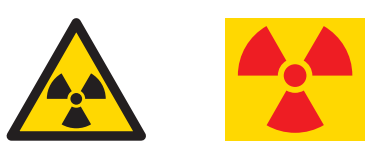
FIG. 2. Examples of the trefoil symbol.
In addition to the symbols shown in Fig. 2, a new symbol is being introduced which will generally appear inside the outer covers of devices, to further warn unauthorized personnel against gaining access to the source within (see Fig. 3).
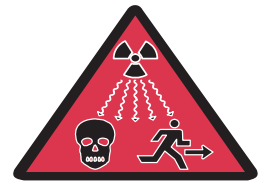
FIG. 3. New symbol to warn against gaining access to a source.